

Businesses, especially those offering SaaS products, need a good understanding of the Product Life Cycle. From business leaders to marketing executives and CX teams, they must have a fair idea of the Product Life Cycle and plan their activities accordingly. This knowledge helps them make important decisions related to product design, features, price points, advertising schedules, market expansion, and packaging.
This guide explains all four Product Life Cycle stages with practical business examples for clarity. It also covers the Product Life Cycle from marketing, Customer Success, and product management perspectives. Diagrams and comparison tables are included to help you understand the different stages and their relevance. Like always, we are here to help you understand and improve your knowledge of the Product Life Cycle.
What is a Product Life Cycle?
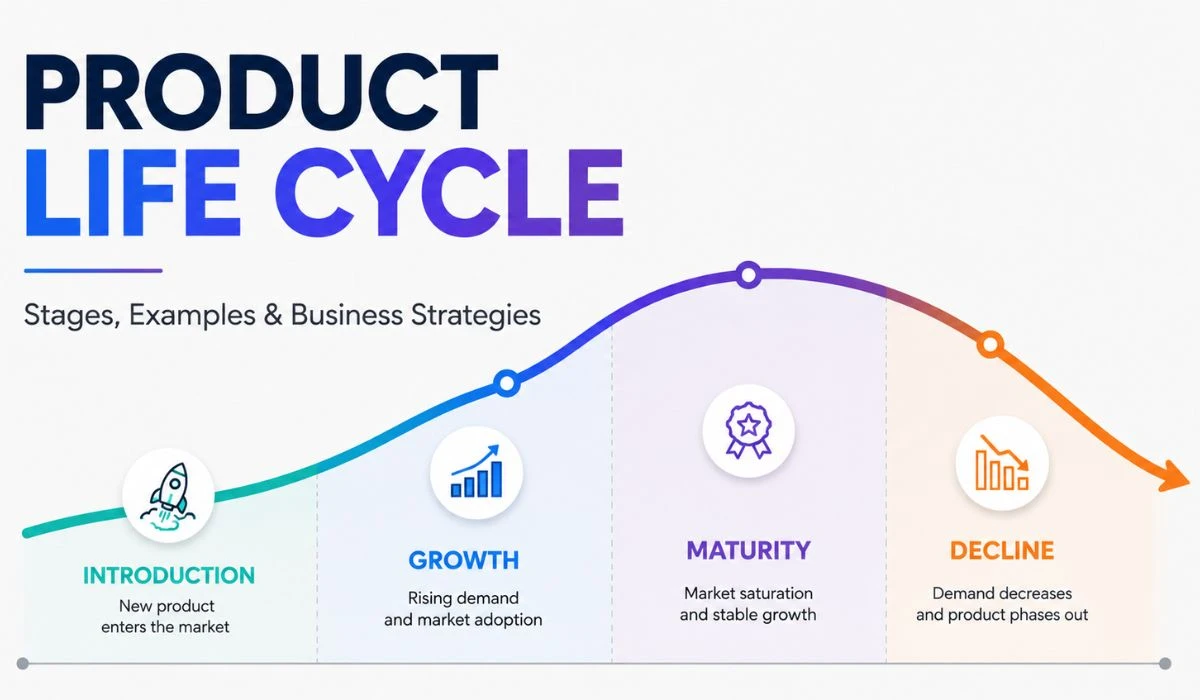
A Product Life Cycle is the time frame between the introduction of a product and its removal from the market. Every product goes through four stages in this cycle:
- Introduction
- Growth
- Maturity
- Decline
The Product Life Cycle should not be confused with Product Development. Product development refers to the research, development, product design, customer needs, features, target audience, and market segmentation that take place before a product is launched. The Product Life Cycle begins once the product is introduced to the market and continues through its growth, maturity, and eventual decline.
Take the example of a SaaS product: GoToMeeting. It was a standalone web-conferencing tool that went through the different stages of the Product Life Cycle and has now reached decline. Alternatives like Microsoft Teams and Google Workspace have made it obsolete, and it will inevitably be phased out of the market.
While the common tendency may be to focus solely on Introduction and Decline, each stage in the Product Life Cycle has its own importance.
Now you understand what a product life cycle is, but why should you care?
An in-depth understanding of the product life cycle affects many major business decisions.
Marketing decisions
If you can properly assess the lifecycle of a product, you can optimise your marketing strategy around it for maximum conversion.
Product pricing
When a product goes through different stages of its life cycle, its pricing needs to change accordingly to remain practical. For instance, a product facing decline won’t be sold for the same price during its growth stage.
Product positioning
Product positioning is concerned with the image and visibility of a product in the market. It also needs to adjust to the stages of the product life cycle for efficiency.
Sales forecasting
You cannot successfully estimate the revenue a product will create without understanding its life cycle. You need to account for the stages of the product life cycle for a clear figure.
Product roadmap planning
You would not go on a road trip if you don’t know where it starts, what routes you will take, or where it ends. Product roadmap planning is essentially a guide for where you want the product to go. Understanding the product life cycle will create better roadmap planning.
Customer Success planning
For a B2B product, customer success planning is a second roadmap that outlines how to help your client get the full benefit of your product. That can be hard to do if you don’t know what stage your product currently is in.
Budget allocation
The R&D costs a product incurs in the introduction stage may not be needed in the subsequent stages. The budget a product requires throughout its life depends entirely on its life cycle.
Product profitability
The profitability of a product is also entirely dependent on its life cycle. Most products report low profits in the introduction stage and higher profits during the maturity stage.
Business forecasting
Predictions of business outcomes will be incomplete without analysing which stage the product(s) is/are in.
Product Life Cycle vs Product Development Life Cycle
Product Life Cycle is not to be confused with Product Development Life Cycle. Both are related concepts that work together but are fundamentally different. Let’s take a look at the key distinctions between the two.
| Product Life Cycle | Product Development Life Cycle |
| Market-focused | Development-focused |
| Begins after launch | Ends at launch |
| Marketing emphasis | Engineering emphasis |
| Revenue stage | Product creation stage |
| Customer adoption | Product design/testing |
The key difference between the two is their function. The Product Life Cycle tracks the commercial life of a product from launch to decline, while the Product Development Life Cycle focuses more on the operations that lead to launch. PDC begins where PLDC ends.
PLC = Product Life Cycle
PDLC = Product Development Life Cycle
Four Product Life Cycle Stages
The Introduction Stage
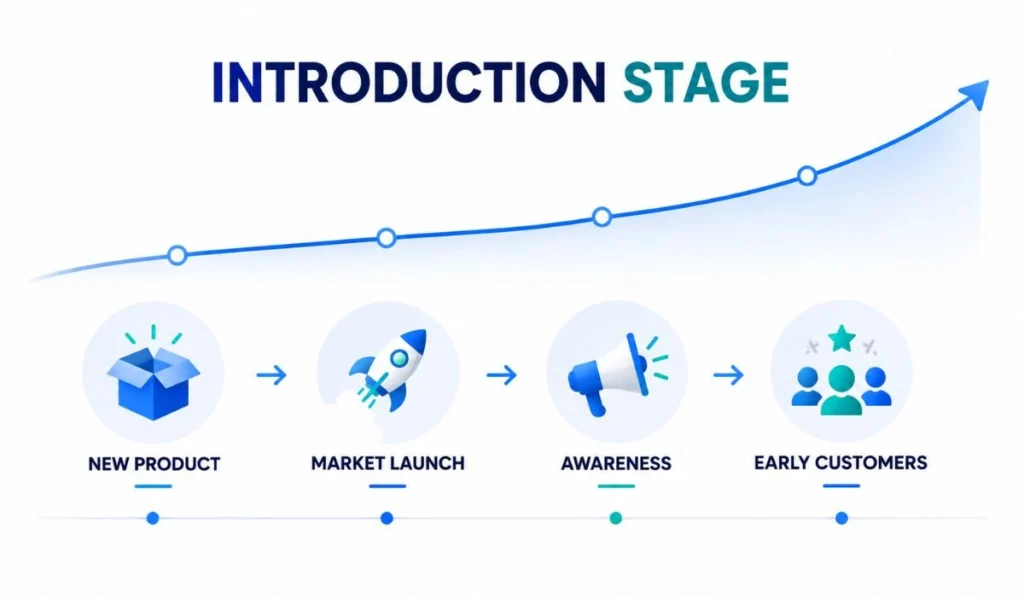
You have conducted market research, identified market segments, and also designed and developed a product that addresses a specific pain point. What comes next is the introduction of the product in the market. From a customer experience perspective, it is the most crucial one. This is also the stage where the major share of marketing and advertising activities happens. Thus, the expenditure tends to be high.
The major goals of this stage involve making the customer aware of the product. Advertisements, at this stage, must focus on customers’ pain points and introduce the product as a solution. Slow sales are common and should not discourage active cultivation of demand. If the product is unique, awareness and visibility can be hard to build. This is why marketing is the central focus in this stage. It should primarily aim to convince the user about the product’s usefulness.
Pricing strategy should complement the objective of building demand. If the product is niche and the price is too high, marketing may not be able to keep your customer’s attention long enough.
The Customer Success team can, and should, collaborate with the marketing team to ensure that the value promised through advertising reaches the customer. This collaboration can essentially make or break the product in this stage.
A Saas example of a product in this stage is Amberd.ai. It is a data intelligence platform.
Note: The marketing activities can decide the success or failure of the product at this stage. The marketing executives must project the product’s value and position it as ‘the solution.’ At the same time, the CX team must ensure that the customers see and get the value promised. The focus here should be on delivering value rather than on sales.
The Growth Stage
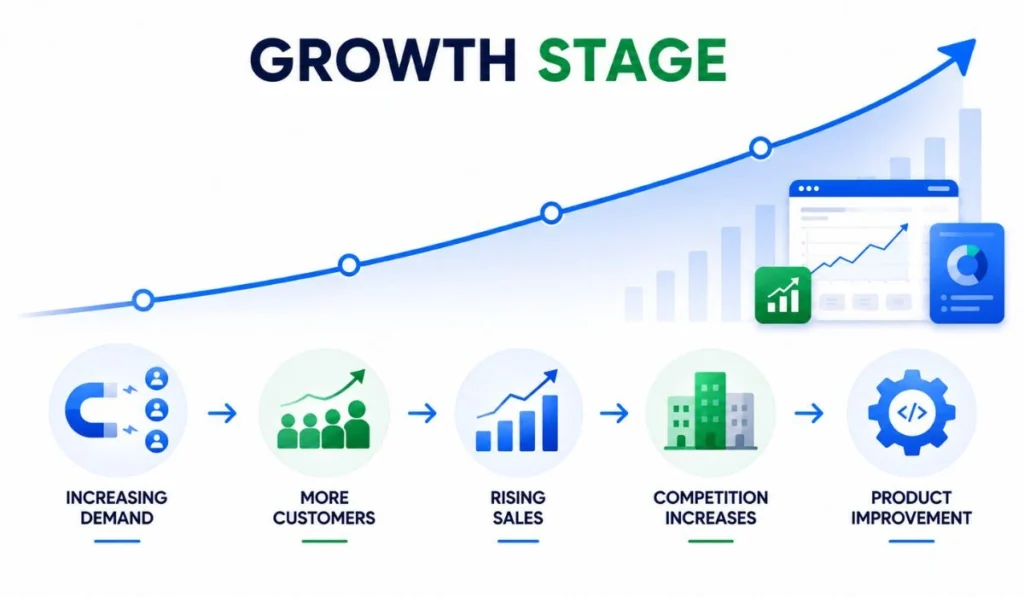
Once the product successfully sails through the introduction stage, it enters the growth stage. This is the stage where the product is accepted and is in demand. The increase in demand would push up production and widen the product’s availability in the market. Therefore, the development teams are on their toes.
Compared to the Introduction stage, the Growth stage needs a sharp increase in product demand. If there is no steep increase in product demand at this stage, the product may fail or become less profitable.
This stage can also be termed the stage of competition. You can expect competitors to emerge with similar products to enter the market. To sustain this, you must differentiate your product from the competitors.
You will have to focus on maintaining the quality of the product and/or adding new features to the product. Product adoption and customer success need high priority as competition runs tight. Competitive pricing may also prove beneficial.
A Saas example of a product in this stage is ClickUp. It is a rapidly growing project management software.
Note: You should aim to increase your market share and focus on enhancing your product during the growth phase. This is the key to staying ahead in the market.
The Maturity Stage
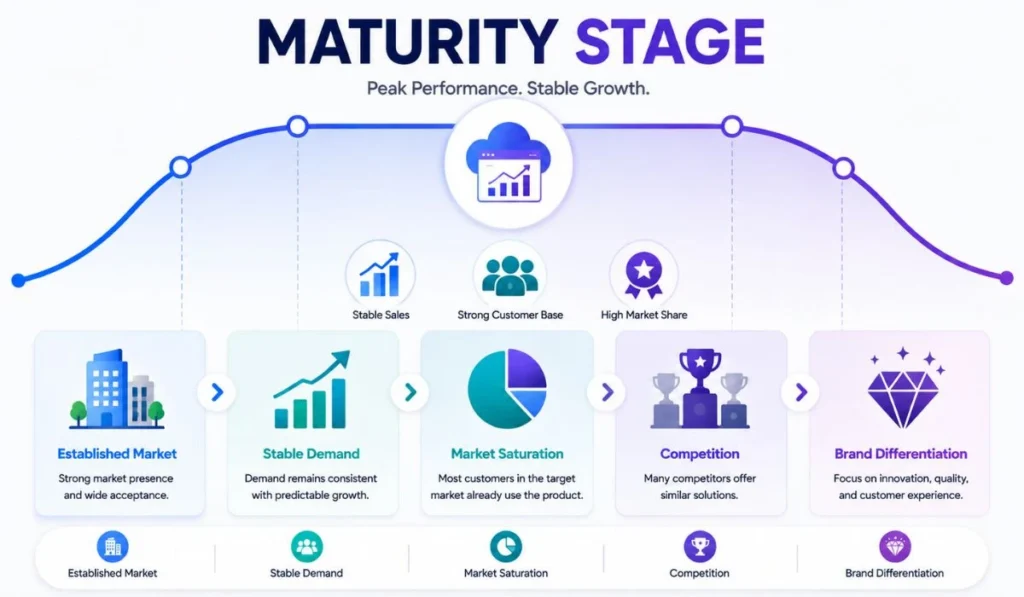
Products that survive the competition at the growth stage enter the maturity stage. At this stage, the product has actually established its position in the market. This is the stage where advertising, as well as production costs, go down significantly and the product reaches its highest levels of profitability.
The later parts of the maturity stage are where the product starts to move towards market saturation. This means that demand for the product reaches a level where it tends to be stable.
Despite the characteristic plateau of this stage, stability should not be taken for granted. Your competitors will try to penetrate your customer base, so marketing priorities should be towards brand differentiation. The customer success team should focus on cultivating brand loyalty. Pricing strategy should periodically be revised to ensure the competitors do not have an advantage.
A Saas example of a product in this stage is Slack. It is an internal communication and collaboration platform.
Note: This is the stage where you should focus on marketing activities to differentiate the product from the rest. Product differentiation at this stage is how you increase your market share.
The Decline Stage
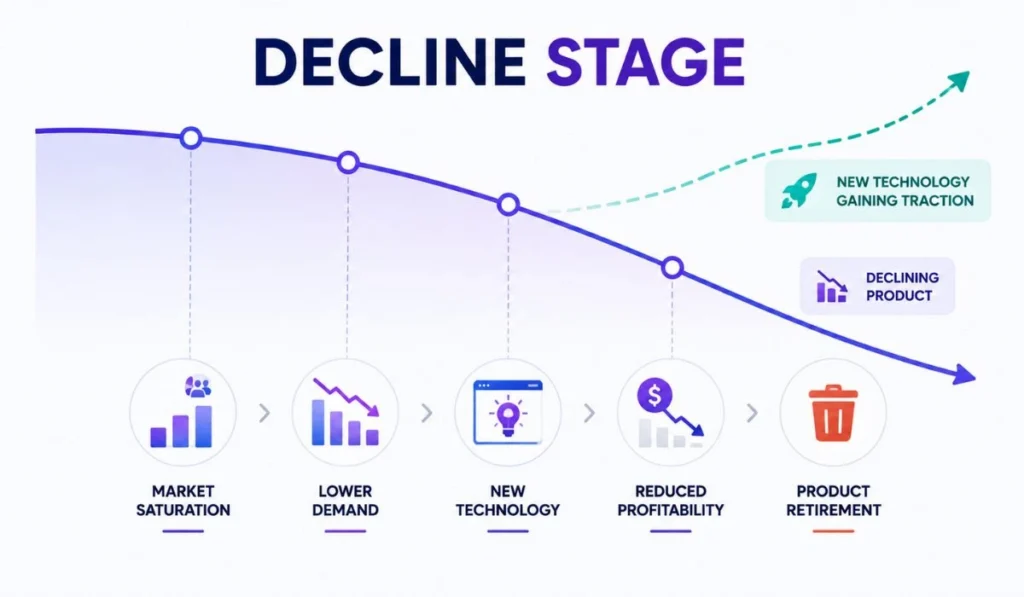
Nothing is eternal. Everything that enters the market must go away someday. When competitors develop a more innovative product, your product’s relevance may decline. It is often due to newer technologies in the field.
Companies with great vision typically start to prepare for new product launches as soon as they realize market saturation. A saturated market indicates that there is no growth opportunity in the existing product at the existing price
At this stage, businesses typically have two alternatives – continue offering the product at a reduced profit margin or move onto different ventures.
Note: In industries such as fashion and accessories, the decline phase may reverse with a trend reversal. But for the SaaS industry, the only option for a product after this stage is to go obsolete.
Product Life Cycle Diagram
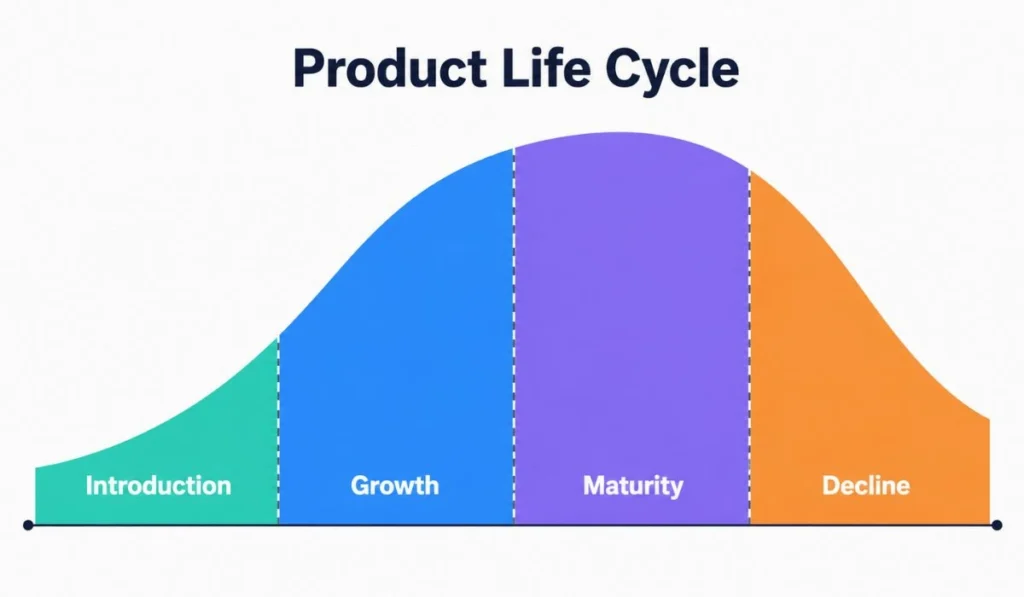
The diagram above shows the relationship between sales and each stage of the product cycle.
Introduction Stage: Sales are its lowest in the introduction stage. It also consumes a lot of resources
Growth Stage: You see the increasing trend of sales in the later parts of the Introduction, gaining higher momentum in the Growth stage. Profits also increase, but it has to compensate for the high costs during the Introduction stage as well.
Maturity: This is where sales peak and eventually start to decline. Rising sales and profit invite competitors and force resource allocation for brand differentiation and competitive pricing.
Decline: Sales plummet after the peak, leading to the Decline stage. Market saturation, heavy competition, newer technology, and several other factors contribute to a product’s decline.
As you can see, the aim of a business should be to extend the growing trend as long as possible. But the maturity stage often stalls growth for two reasons. Market saturation and new technology. While market saturation is unavoidable when your product is a success, you can extend the maturity stage by adopting innovations as they come.
Examples of Products that Completed their Product Life Cycle
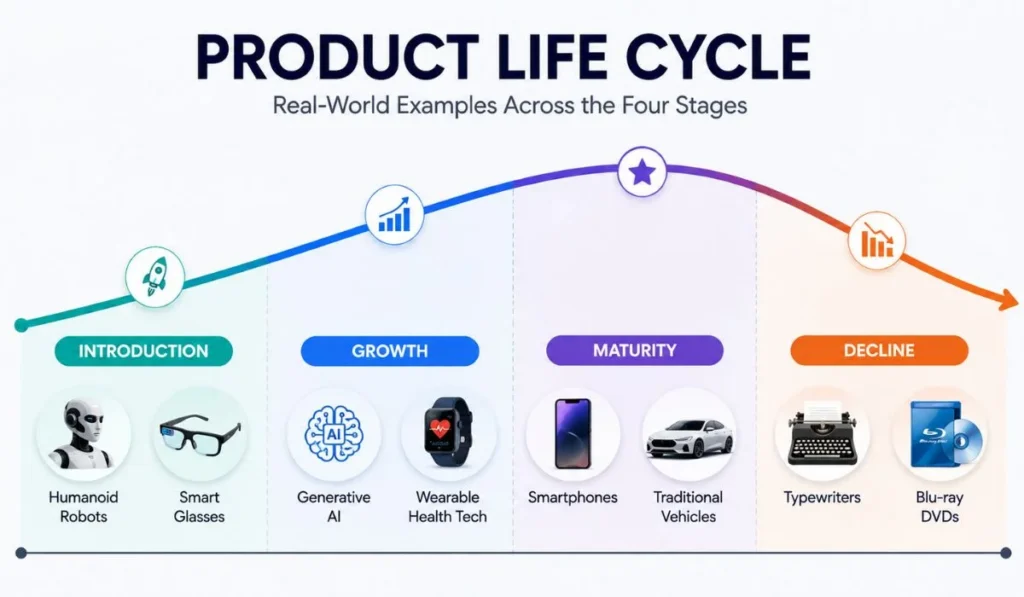
Now that you understand the four stages of a product life cycle, let us clarify the understanding with a few examples.
The Introduction Stage
Humanoid Robots – AI (Artificial Intelligence) powered Humanoid robots are in their introduction phase. They are not made available for sale as of yet, but it is already a hot topic. Marketers are slowly driving up the demand for the product with exhibitions, demonstrations, and advertisements.
Smart Glasses – Consumer AR/XR glasses are an example of a product that is in the later parts of the Introduction stage. Its growth is rapid, and demand is rising exponentially. Sales have also reached great new heights. Tech giants like Meta, Google, and Samsung are already in competition.
The Growth Stage
Generative AI (Artificial Intelligence) – One of the biggest and most rapidly growing products right now is Generative AI. It has made its arrival known. Marketing is in full effect. Demand, sales, and revenue are all climbing steadily
Wearable Health Tech – Most wearable health tech used to be a fitness tracking solution in the Introduction stage. The innovative shift towards medical-grade wearables allowed them to make waves in the market and increase their growth massively.
The Maturity Stage
Smartphones – today, almost everybody has a smartphone in their hands. This product has outgrown the introduction and growth stages. Companies providing smartphones are now on their toes to provide competitive prices, create product differentiation, and maintain their brand identity. The declining phase may be far, but this product has travelled quite a distance in the maturity stage.
Traditional Vehicles – Traditional gas-powered cars have reached a plateau in their lifecycle. It has undergone market saturation where the availability is wide, and the demand growth has slowed down. Its competition now comes from newer technologies like electric-powered vehicles.
The Decline Stage
Typewriters – When introduced in the 19th century, typewriters were an innovative product. They sailed through the introduction and growth stage and became popular in the market. With the introduction of electronic word processors and computers, typewriters had to undergo their declining phase. Today they are obsolete.
Blu-ray DVDs – with the growth of streaming platforms like Netflix and Amazon Prime, Blu-ray DVDs have started declining. But surprisingly, Blu-ray DVDs have captured a niche market as collectibles, which has slowed the decline a lot. It goes to show that stages of the Product Life Cycle may not always be entirely predictable.
Product Lifecycle Management (PLM) Explained
Product Lifecycle Management includes all the processes that manage the life cycle of a product, from its launch to its retirement. If Product Life Cycle is a timeline, Product Lifecycle Management is the system of plans built around that timeline.
PLM software is used to centralize all data related to a product and connect and organise various teams throughout all stages of a product’s lifecycle. Organisations employ the assistance of PLM software like Propel PLM for this.
Manufacturing, Saas and enterprise companies especially rely on PLM software for the convenience it brings by centralizing all product data.
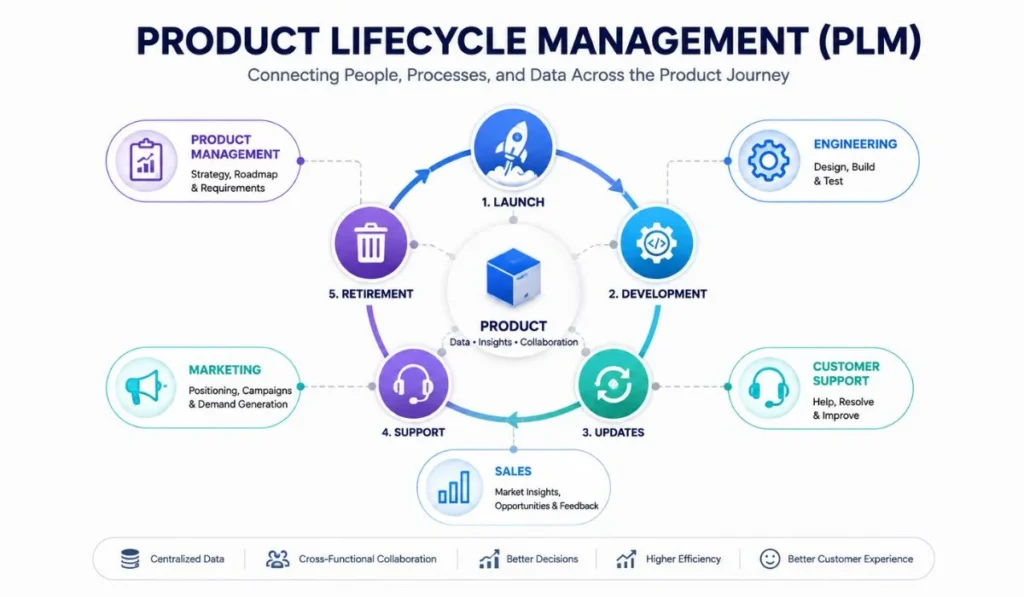
For Manufacturing companies, PLM software can help track their design changes, enable supply chain synchronization, and track regulatory requirements.
For Saas, they can manage software updates and connect teams from product manager to customer support.
For enterprises, they can contribute to cost reduction, collaboration, and faster time-to-market.
Final Words
A clear understanding of the product life cycle helps management and marketing executives make the right decisions at the right time. Different stages require different marketing strategies. Hence, it is important to evaluate the current stage at which a company’s product stands.
A product at the introduction stage requires different marketing tactics than a product at the growth stage. A product at the growth stage will need different production planning than a product at the maturity stage. So, we need to understand and evaluate different stages of the product life cycle.
We will also need to assess the lifecycle for Customer Success. Effective customer success can build long-term trust. For that, understanding product lifecycles is very important, as customer needs also undergo changes according to the stages.
Another success strategy involves continuous product innovation. A firm grasp on product lifecycles can prepare you to adapt to any market changes. You will be able to adopt necessary innovations at the right time to keep your product’s growth momentum going.
In essence, understanding product lifecycles gives you a clear advantage throughout the life of a product in the respective market. It facilitates data-driven product decisions in the appropriate stages to boost a product’s life and profitability.
Frequently Asked Questions
The four stages of the product life cycle are Introduction, Growth, Maturity, and Decline.
A firm understanding of the product life cycle can drive important business decisions.
Product Development Cycle focuses on processes till the launch, including building, testing, and launching the product. Product Life Cycle focuses on a product’s journey from launch to retirement.
Product Lifecycle Management (PLM) manages every process involved at every stage in a product’s lifecycle. It facilitates collaboration between teams across all stages.
It is not impossible but difficult. A product can redesign itself to find new markets or completely reposition itself among new customers.
Market saturation is a phenomenon that occurs in the Decline stage of a product. A saturated product cannot create high demand. It has already reached a majority of its market.
The maturity stage is the most profitable. Sales peak in this stage, and marketing and operational costs tend to be at their lowest.
In the Growth Stage, the product demand rises rapidly, driving sales higher. It continues the trend till it plateaus in the next stage. It is also the stage where competitors usually enter the market.
Marketing strategies have to take the product life cycle into consideration to be efficient. Each stage will require tailored marketing strategies.
Saas products go through the same four stages of the product life cycle, including Introduction, Growth, Maturity, and Decline.