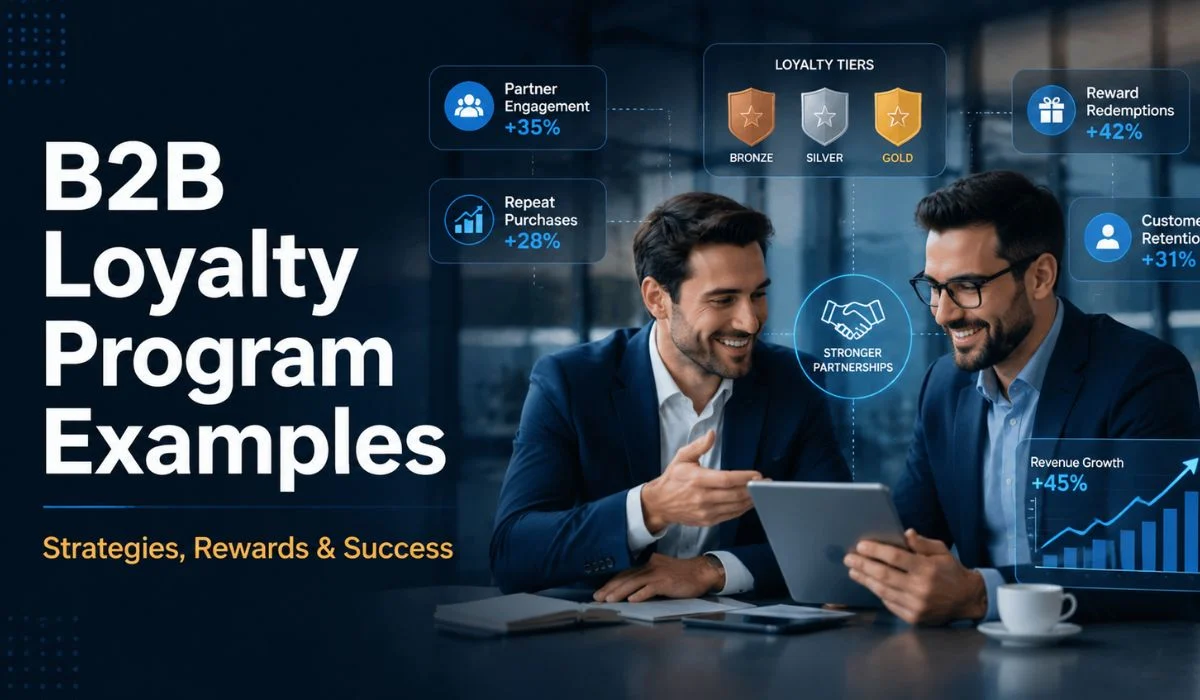


From apparel brands to food delivery platforms, almost all B2C businesses offer loyalty programs, and a majority of them are a huge hit. But implementing these programs in Business-to-Business (B2B) environments can be a little different. The major challenges arise from the difference in the businesses’ approach to the customers.
B2B loyalty fundamentally differs from B2C consumer loyalty. B2C loyalty programs often focus on frequent consumer engagement and purchase incentives, while B2B loyalty programs usually focus on long-term relationships, partner enablement, and business growth. B2B loyalty programs, on the other hand, focus on long-term value and business growth.
B2B loyalty programs target customers, distributors, resellers, agencies, and channel partners. Their rewards, unlike B2C loyalty rewards, include training, recognition, exclusive services or business benefits, apart from the monetary incentives.
Now, if you are a B2B business, you may have many questions on what to do and where to start. This article looks at active B2B loyalty programs in 2026. By examining them, we will be able to comprehend what makes them work and learn by example.
What Is a B2B Loyalty Program?
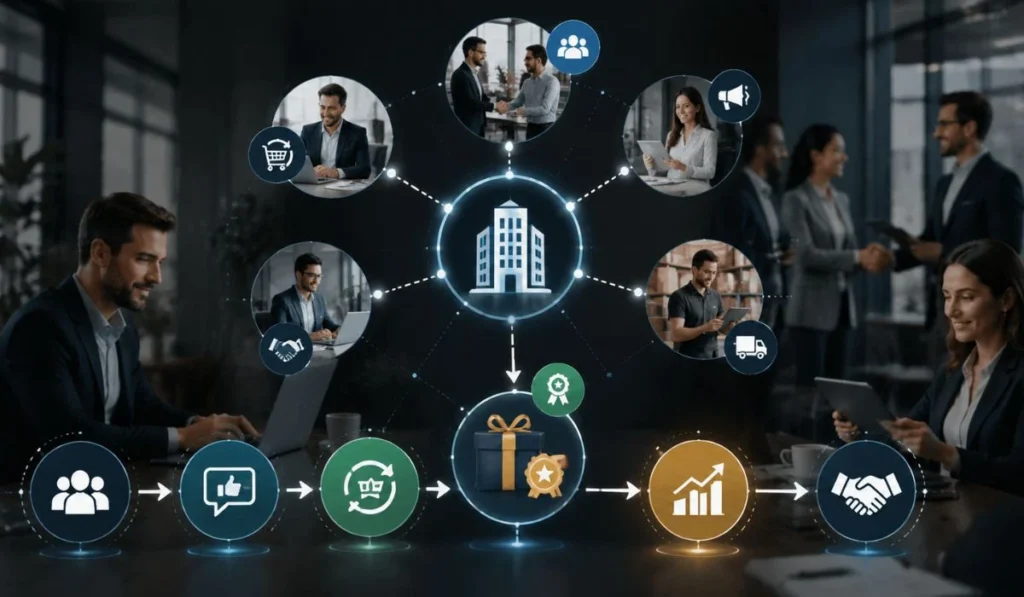
A B2B loyalty program is a structured rewards system designed to strengthen relationships with business customers, partners, distributors, or resellers by encouraging engagement, repeat purchases, referrals, and long-term collaboration.
Benefits of B2B Loyalty Programs
1. Access to reliable customer data
By offering loyalty programs, B2B businesses gain invaluable customer data. They can provide valuable information about buying habits, customer engagement, etc. This helps you build data-driven strategies for relevant direct communication, personalization, and customer segmentation, all of which can lead to positive business outcomes in the long run.
2. Encourage up-selling and cross-selling
Up-selling and cross-selling are integral to the expansion of a B2B organization. Loyalty programs help encourage expansion by incentivizing add-ons and upgrades (upsells and cross-sells).
3. Gain actionable insights to enhance business strategies
The success or failure of loyalty programs tells a lot about the product, service, and customer behavior. Participation, redemption, and engagement data collected during the program can help assess their preferences. You can also use direct contact information to get direct product-related feedback. These insights can further be used to enhance the product, sales & marketing, and partnership departments.
Opportunities
Support Customer Retention
Opportune B2B loyalty programs with relevant rewards can greatly assist customer retention, and the data collected can improve retention strategy. A strong customer retention rate can reduce your over-dependency on constant acquisitions and improve your recurring revenue.
Better Personalization
Customers tend to spend more on a brand/product that provides personalized services. And with customer insights from loyalty programs, businesses can build a personalized approach.
Relevant customer data that was collected during the loyalty program can help you:
- Set up offers tailored to their respective needs and usage
- Enhance communication by choosing the channel they are most responsive to
- Personalize rewards most beneficially for the customer
- Cater partner support in specific pain areas
Types of B2B Loyalty Programs
Point-based programs
Point-based reward programs function by creating a point system for the customer for tasks completed. The tasks that earn points may include purchases, training sessions completed, referrals, etc. Once the customer reaches the preset amount of points, they can redeem them for rewards.
Tiered loyalty programs
Tiered loyalty programs involve grouping customers into progressive tiers like Bronze, Silver, and Gold based on several criteria like purchase volume, level of engagement, recurring revenue generated, etc. The higher the tier, the better the rewards.
Referral programs
Referral programs work by rewarding existing customers for bringing in new customers. If the referring customer is well established within the industry, this can lead to excellent leads. The rewards are usually credit, commission, or bonus.
Partner/channel incentives
In a B2B, your immediate customer may not always be the end customer. Especially in industries like technology, your direct “customer” might be a distributor, a reseller, or an agent. Incentivizing them can encourage sales and improve your relationship with them. Sales-based commission is a common way to reward them.
Training and certification programs
You can also reward customer loyalty with training and certification programs to enhance their experience with your products. It can lead to faster TTV (Time to Value), which can be beneficial for both parties involved. Conversely, you can also reward them for completed training hours and product certifications, which will serve the same purpose.
Rebates/purchase incentives
The most common purchase incentives are rebates and discounts.
Discounts are a price reduction that takes place at the time of purchase. Rebates, on the other hand, are essentially a partial refund you reward your customer with on the money paid for your product. The customer pays full price at first and can later claim a part of it back.
Discounts can drive up sales more than rebates, but rebates allow you to protect brand and price integrity while still incentivizing purchase. It also allows for the collection of valuable data.
Examples of B2B loyalty programs
HubSpot Solutions Partner Program
Program: HubSpot Solutions Partner Program by HubSpot
Target audience: Service firms, consultancies, and agencies (partners)
Program type: Tiered loyalty programs for partners
How it works:
- Partners earn sourced, assisted, and managed points
- They progress through tiers (Gold, Platinum, Diamond, and Elite) based on the points
- Each tier has specific rewards and perks
Key benefits/rewards: 20% commission for 3 years, 20% commission for 1 year on deals above $3000 USD (for select tiers only)
Why it works: Partners are incentivized for acquisition while the tiered system ensures that each partner receives rewards suited to their contribution.
Key takeaway for B2B companies: Tiered loyalty programs encourage partners
Lenovo 360 Expert Achievers (formerly Lenovo LEAP)
The Lenovo Expert Achievers Programme (LEAP) offered two ways to earn: completing educational modules about servers and by tracking sales performance. Both of them were tailored for individual frontline sellers in their partner organizations.
Program: Lenovo 360 Expert Achievers
Target audience: Sales and Technical Staff, Resellers
Program type: Partner/channel incentives + Training and Enablement
How it works:
- Sell and Earn: The staff log eligible sales on the LEAP portal to earn points
- Learn and Earn: The staff complete training and certification to earn points
- Earned points can be redeemed for special perks
Key benefits/rewards: Prepaid Lenovo Mastercard, “Score BIG” Incentives. Selection of gift cards and merchandise
Why it works: Instead of targeting the partner organizations as a whole, Lenovo targets the individual seller of each product for this program. This incentivizes sellers on an individual level.
Key takeaway for B2B companies: Targeting frontline employees instead of the corporate partner account can drive growth.
Celebrity Rewards
Celebrity Cruises is a well-known luxury brand that gets most of its sales via travel agents. In 2015, the brand introduced its loyalty program, Celebrity Rewards. The program incentivized best-performing agents. They offered points for every booking made by the agent. The program encouraged 12,000 agents to join. The ultimate results were an increased activity rate, retention rate, and an increase in sales.
Program: Celebrity Rewards by Celebrity Cruises
Target audience: Retail travel professionals
Program type: Partner/channel incentives
How it works:
- Agents make Celebrity Cruises bookings for their clients
- Earn points from bookings by submitting them to the official portal (different classes of booking earn different levels of points)
- Reach the required points (2500 points for first redemption)
- The reward amount will be loaded to their Celebrity Rewards Mastercard on redemption
Key benefits/rewards: Financial Incentive
Why it works: Instead of the usual standard commission, Celebrity Rewards offers Celebrity Cruise agents a tiered cash payout.
Key takeaway for B2B companies: Direct incentive to booking agents can yield active advocacy and engagement.
American Express Partners Plus
American Express has a referral-based partnership program called ‘American Express Partners Plus.’ Through the program, American Express rewards organizations if they successfully refer their contacts to AE’s Global Corporate Payments program. The simple program played a key role in deepening trusted partner relationships
Program: American Express Partners Plus by American Express
Target audience: B2B companies, Commercial organizations, Professional associations
Program type: Referral program
How it works:
- User register/login on the Partner Plus Portal
- They submit a referee
- An American Express specialist follows up
- When the lead is converted, the user receives rewards (gift card or vouchers)
Key benefits/rewards: Cash bonus, Vouchers
Why it works: American Express clients include individual customers, SMBs, and large corporations. They successfully managed to leverage this massive client base to drive acquisition
Key takeaway for B2B companies: Incentivized referrals can massively increase advocacy and thus acquisition
HP Business Rewards
HP Business Rewards is a partner/channel incentives-based loyalty program. It lets HP partners earn points when customers buy HP printing supplies from them. HP uses rewards and recycling initiatives to encourage engagement with its products and sustainability programs.
Program: HP Business Rewards by HP
Target audience: Consumers, SMBs, enterprises, IT teams, institutions, etc
Program type: Rebates/purchase incentives (points-based)
How it works:
- The customer has to sign in with an HP account
- They earn a point for every $4 USD spent on HP printer supplies
- They can also earn 10 points if they recycle used cartridges through the HP Planet Partners program
- The points can be redeemed for 100+ of the latest HP printers, scanners, etc.
Key benefits/rewards: HP printers, scanners, and select tech services
Why it works: The customers already need supplies. The program only encourages brand loyalty and not increased spending.
Key takeaway for B2B companies: Incentivizing routine purchases can positively affect long-term customer relationships.
Telarus Partner Loyalty Program
US-based telecommunications sales agency Telarus has a loyalty program called the ‘Telarus Partner Loyalty Program.’ It is a tiered program intended for partners.
Program: Telarus Partner Loyalty Program
Target audience: Technology Advisors, Partners
Program type: Tiered loyalty program
How it works:
- Partners earn loyalty points when they close high-value deals and generate recurring revenue
- Points can be used to redeem tier-specific benefits
Key benefits/rewards: Tiered commission percentages ranging from 3% to 12%, marketing development funds (MDF), customized event planning, and exclusive travel or VIP experiences.
Why it works: It is entirely performance-driven, and the rewards are customized according to tier.
Key takeaway for B2B companies: Loyalty programs that specifically reward high-value deals are greatly effective.
Mailchimp & Co
Email marketing and newsletter service provider Mailchimp developed a loyalty program for agencies and freelance marketing experts. Mailchimp rewarded marketing professionals through the program for using Mailchimp to serve their clients. The professionals would get insider training, access to exclusive tools, and invitations to exclusive events as a reward.
Program: Mailchimp & Co by Mailchimp
Target audience: Marketing freelancers, independent consultants, boutique creative agencies, and large marketing firms
Program type: Partner/channel incentives
How it works:
- Members log in to Mailchimp & Co
- Connect paid clients
- Based on the number of clients a member connects, they can receive financial commissions, progress through tiers (member, partner, and pro), avail training via Mailchimp Academy, and gain a directory listing.
Key benefits/rewards: Financial commissions (like a 25% referral reward in the member tier), training via Mailchimp Academy, Directory listing
Why it works: The Mailchimp & Co loyalty reward system is mutually beneficial
Key takeaway for B2B companies: Partnership loyalty programs based on mutual benefit can foster deep brand loyalty and advocacy.
IBM Partner Plus
IBM Partner Plus is a tiered loyalty program that aims for accelerated business growth for its partners by offering transparent financial incentives and making IBM training and technical resources readily available. It has separate tracks for different kinds of partners
Program: IBM Partner Plus by IBM
Target audience: Partners (tech companies, software vendors, resellers, managed service providers, etc)
Program type: Tiered loyalty program + Training and enablement
How it works:
- Partner registers their company with IBM Partner Plus
- They select tracks ( “ Build” for software developers and ISVs embedding IBM tech, ” Sell ” for resellers and distributors of IBM hardware and software, “Service” for system integrators and consultants providing deployment and managed services)
- Use the New Partner Acceleration Program for fast training and access to resources
- Gain badges that let them climb tiers (Silver, Gold, and Platinum)
- Access the special perks rewarded to different tiers
Key benefits/rewards: Front-end margins, skills-based proficiencies, new client acquisition bonuses, lifecycle/SaaS adoption accelerators
Why it works: It virtually erases the difference in sales and technical education that IBM employees and external partners receive
Key takeaway for B2B companies: Partnerships based on transparent outcome collaboration can outperform transaction-based reselling.
Nufarm Priority Partnership
Nufarm Limited is a leading global specialist seeds and crop protection company. The company operates through retailer channels. It has come up with the loyalty program ‘Priority Partnership’ for its partners in New Zealand. The company rewards partners for purchasing and promoting its products through the program.
This way, the company earned the loyalty of partners through rewards. At the same time, it was also able to educate customers about its products
Program: Nufarm Priority Partnership by Nufarm Limited
Target audience: Commercial agricultural customers, farmers, growers, and rural resellers in New Zealand
Program type: Points-based program
How it works:
- Regular customers link their suppliers through the Nufarm Priority Partnership portal
- They purchase Nufarm products and earn points
- When they reach the required points, they can redeem them for rewards from a catalog of over 5000 choices.
Key benefits/rewards: 5000+ rewards across items like homeware, appliances, electrical goods, sporting equipment and tools to children’s toys, travel, and events.
Why it works: It is a flexible reward system with a wide range of choices
Key takeaway for B2B companies: Keeping a better catalog of rewards can help make the system more appealing to a diverse customer base.
GAF Rewards
Program: GAF Rewards by GAF
Target audience: Roofing Contractors, Builders
Program type: Tiered loyalty program
How it works:
- Customer register their organization in the GAF Rewards Portal
- Purchase eligible products
- Earn points (based on your contractor status: Master Elite, Certified/Certified Plus, Non-certified)
- Redeem your points for rewards
Key benefits/rewards: Reloadable prepaid debit cards, retailer gift cards for your crew, warranty fees and QuickMeasure™ reports, branded gear and travel rewards.
Why it works: Encourages brand loyalty through tangible value
Key takeaway for B2B companies: Encouraging certification through better rewards can increase product education.
What Makes a B2B Loyalty Program Successful?
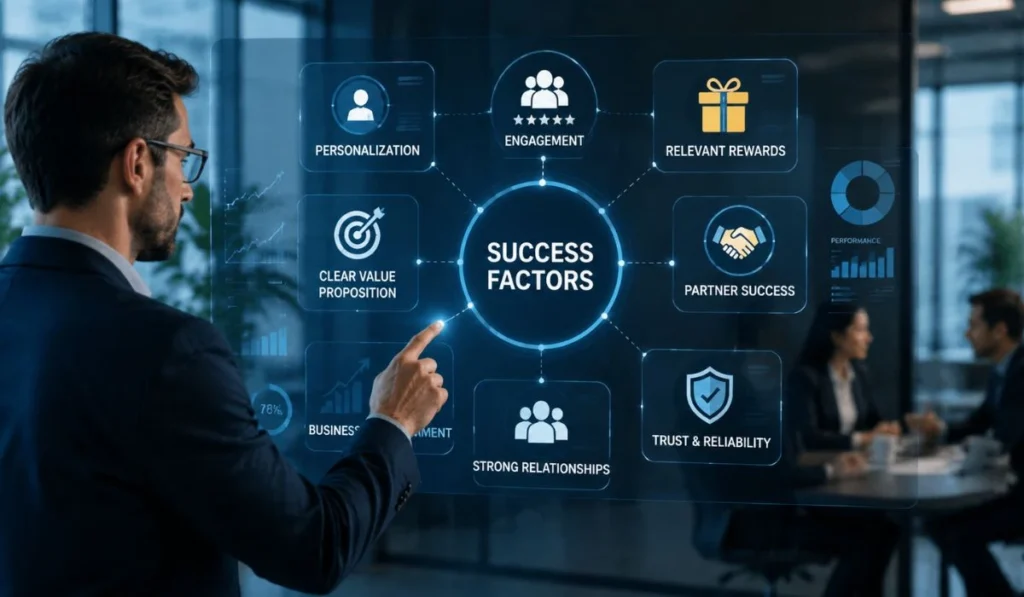
Several factors go into the success of a B2B loyalty program. It may not always be the traditional rewards that benefit you and your customer. They might prefer business benefits like training, leads, recognition, support, and revenue opportunities. Here are a few things you should think about before framing a B2B loyalty program.
- Simple program rules: Extremely complex rules discourage your customers. Avoid the tendency to overstuff conditions.
- Relevant rewards: Rewards are only good if they can be used by the customer. If the reward has no relevance to the industry, business, or the customer, there is no incentive.
- Easy participation: It shouldn’t be hard for the customers to engage in the program. In fact, the program should simply incentivize the increase in what the customer was already doing before the program began.
- Customer/partner segmentation: Remember to segment your direct end users and partners before the program. Their rewards should work differently, as partners already move higher volume.
- Personalization: Instead of a single criterion for all, tailor the conditions and rewards based on segments or accounts to maximize participation and to encourage progress.
- Valuable non-cash benefits: Rewards don’t always have to be cash. Offer non-monetary and relevant rewards like upgraded net terms, early product/feature access, priority support, etc.
- Training and enablement: You can reward customers for completing training and product certifications. Product education can drive up product adoption rates and result in faster value realization.
- Transparent eligibility requirements: Ambiguous eligibility requirements will lead to lower participation rates and adversely affect trust.
- Alignment between rewards and business outcomes: Ensure that the conditions for the program drive positive business outcomes, both for you and your customers.
- Regular program evaluation: Review and evaluate whether the program is a success at drawing positive business outcomes and developing better customer relationships.
How to Measure B2B Loyalty Program Success
To measure the success level of a B2B program, you need to first consider the primary goal of the program. Whether a program was intended to create or enhance customer loyalty, to upsell or cross-sell, to generate recurring revenue, etc., determines whether it was successful. Depending on your goals, you can use the KPIs (Key Performance Indicators) given below to determine the success or failure of your program.
| KPI | What it measures |
| Program participation rate | Percentage of total number of participants against eligible customers |
| Reward redemption rate | Rewards redeemed by participants against rewards issued by the firm |
| Repeat purchase rate | The number of customers who return to make a repeat purchase in a set time |
| Renewal rate | The percentage of customers who renew their subscription with your product |
| Customer retention | The percentage of customers that your company/specific product has managed to keep loyal over a set period of time |
| Referral activity | Referral metrics like share rate, participation rate, conversion rate, and referral revenue rate help track the success of your referral system. In loyalty programs, you can track the impact of the program on referral metrics |
| Expansion revenue | Measures the revenue created from existing customers from upsells and cross-sells |
| Partner-generated revenue | Measures the revenue generated by partners (agents, resellers, distributors, etc) |
| Customer lifetime value | Predicts the average revenue you can generate from a customer in their complete lifecycle. In loyalty programs, it can help you track program ROI and justify its existence |
| Training/certification completion | Tracks the number of customers who completed training and received certification. A loyalty program aimed at increasing this will see potential increases in retention, expansion, referrals, and several other metrics due to increased product expertise |
Not every B2B loyalty program needs to measure every metric. For instance, a referral program intended to boost referrals will keep track of share rate, participation rate, conversion rate, and referral revenue. Generally, it doesn’t need to track KPIs related to customer renewal. The KPIs should be selected based on the type of the program and its primary objective.
Key Takeaways
- Always separate your B2C clients from the B2B clients.
- Make sure that you clearly document the details.
- Keep earning and redemption rules simple
- Make sure that the rewards you offer are relevant and valuable.
- Segment participants to customize the program
- Frame programs that are suited to your industry
Conclusion
B2B loyalty works entirely differently compared to B2C consumer loyalty. While B2Cs use a casual approach, B2Bs are more reserved in their approach. But if you do it right, loyalty programs for B2Bs can be a huge hit.
An effective loyalty program should be able to create value for both the business and the participant. The value that the participant receives in a B2B loyalty program does not always need to be monetary. It can include non-monetary rewards such as enablement, recognition, and exclusive business benefits.
Choosing the right loyalty program for your business depends on several factors like the target industry, customers, partners, and business objectives. Take cues from the examples we have shared and start your journey.
Frequently Asked Questions
A B2B loyalty program is a structured program that rewards a B2B company’s clients for higher volumes of purchasing, long-term customer relationships, and strategic engagement.
Examples of successful B2B loyalty programs include Lenovo LEAP, HP Planet Partners, Mailchimp & Co, and Nufarm Priority Partnership.
B2C loyalty programs reward individual purchases on a smaller scale for short-term loyalty, while B2B loyalty programs deal with a much bigger scale and reward long-term loyalty
Rewards relevant to the business, like account credits, discounts, upgraded payment terms, higher priority customer support, professional training and certifications, and early access to new products or features, are suited for B2B loyalty programs.
The easiest way to measure the success of a B2B loyalty program is to pay attention to metrics like Program participation rate, Reward redemption rate, Repeat purchase rate, Renewal rate, Customer retention, and referral rates, etc. They will help you assess the financial impact and customer engagement of a B2B loyalty program.